News
IP67 Rating Guide for Outdoor Power Adapters - Why IP67 Matters for Industrial Power Solutions
A comprehensive guide to IP67 rating and its importance for outdoor and industrial power applications
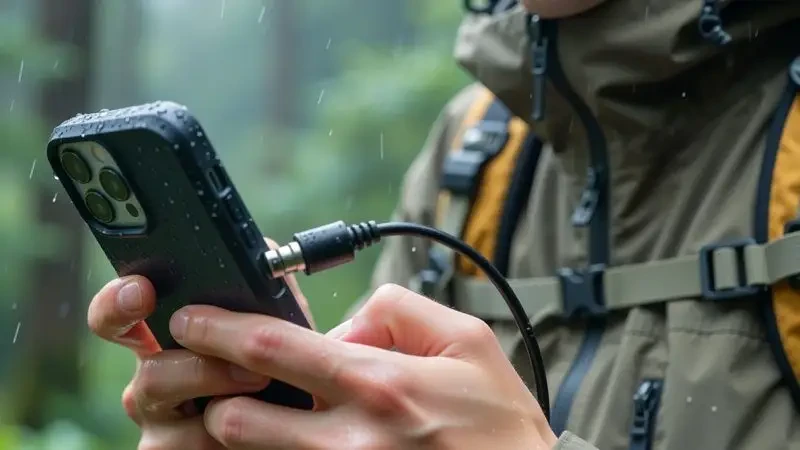
When selecting a power adapter for outdoor installations, marine environments, or industrial settings, one specification consistently stands out: the IP67 rating. This seemingly simple two-letter-and-number combination tells you exactly how well a device can withstand the elements — and choosing the wrong rating can mean costly failures, safety hazards, and unplanned downtime.
In this guide, we break down everything you need to know about IP67, why it matters for power solutions, and which Example Power products carry this critical certification.
The IP (Ingress Protection) rating is an international standard defined by IEC 60529 that classifies the degree of protection provided by electrical enclosures against intrusion from foreign bodies and moisture. The two digits each carry specific meaning:
The first digit — 6 — represents the highest level of solid particle protection. A rating of 6 means the enclosure is completely dust-tight; no dust can enter under any circumstances, even after prolonged exposure.
The second digit — 7 — indicates protection against the effects of temporary immersion in water. Specifically, the device can withstand being submerged in up to 1 meter of water for 30 minutes without suffering harmful ingress.
Together, IP67 represents a robust protection rating available for commercial and industrial power equipment, ensuring reliable operation in environments where dust, rain, splashing, and even accidental submersion are everyday realities.
Power adapters deployed outdoors or in harsh environments face challenges that indoor-rated units simply were never designed to handle. Moisture infiltration can cause short circuits, corrosion of internal components, and catastrophic failure. Dust accumulation can block ventilation, leading to overheating and reduced lifespan.
Consider a few common scenarios where IP67 becomes essential:
Outdoor lighting systems — Landscape lighting, security floodlights, and architectural illumination run 24/7 through rain, snow, and humidity. A non-rated adapter exposed to these conditions will fail within months.
Marine and coastal installations — Salt-laden air accelerates corrosion dramatically. IP67-rated enclosures prevent both moisture and salt particles from reaching sensitive electronics.
Industrial automation — Factory floors generate dust, coolant mist, and occasional washdowns. Power supplies controlling PLCs, sensors, and actuators must continue operating through all of it.
Agricultural and irrigation systems — Controllers and sensors in fields and greenhouses operate in mud, rain, and high-humidity conditions where only sealed equipment survives.
For specifications, samples or certification documents related to this update, contact our sales team at sales@example.com.
Need a quotation for a similar project?
Send your output specification and annual volume.
Related Articles
12V 2A Power Adapter (24W): 24W vs 36W, Plug Types & OEM Guide
Compare 12V 2A (24W) and 12V 3A (36W) adapters, plug types for US/EU/UK/AU, connector sizing, certifications and OEM customization. Factory-direct guide
Read More
Smart 24V 10A Power Supply With High Working Efficiency
Compact Power, Maximum Efficiency: The Ultimate 24V 10A (240W) Power Adapter
Read More
How to Choose the Right Power Adapter for Industrial Applications - Complete Buying Guide
A comprehensive guide to selecting the optimal power adapter for industrial environments, covering voltage requirements, safety certifications, IP ratings, and environmental considerations for reliable long-term operatio
Read More